The Perfect-Future Picture Leaves Out the Useful Parts
A perfect-future picture can hide ordinary needs and trade-offs. Use a quiet stretch of imagined life to identify what matters before choosing a direction.
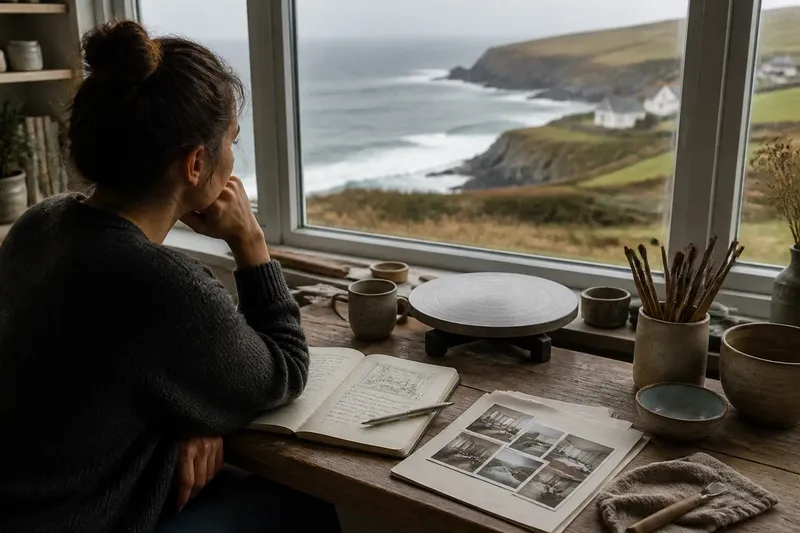
The most common mistake in making a perfect-future picture is treating its brightest scene as a plan. A new studio or a move to the coast may capture a real desire, but the image cannot tell you what that desire asks of the rest of your life. Read it as a clue, not a decision.
Notice what the image is asking for
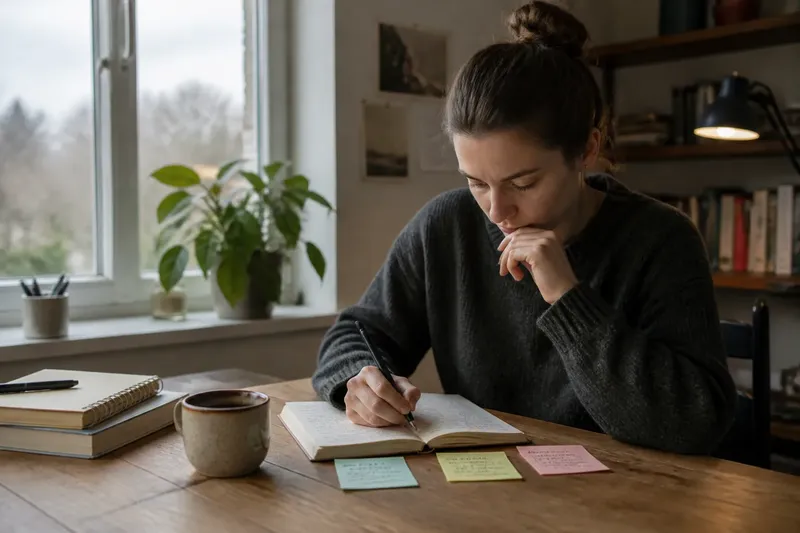
Write down the future scene that keeps returning to you. Use a blank page, a notes app, or the back of an envelope. Record the place, the activity, the people present, and the detail that feels most satisfying. Leave the scene uncorrected for now.
Then name what the appealing detail seems to provide. A ceramics studio might suggest room to make things; a coastal home might suggest quiet or a sense of openness. The useful question is not whether the scenery is sensible. It is what the scenery lets you imagine feeling or doing.
Let the imagined future move through an ordinary stretch
Instead of building a day around routines and trade-offs, follow the scene into a less eventful span of life: a stretch when nothing especially dramatic happens. Write a short account of what is on your mind, what draws your attention, and what you keep returning to. Leave out the highlight reel and the logistics. The purpose is to notice the pattern of interest, not to simulate a workday.
Say you keep picturing a small ceramics studio. Imagine that, in an invented stretch of ordinary life, you spend a quiet interval shaping a bowl, then find yourself thinking about the form long after you have stopped. You also notice that the imagined studio itself matters less than having space to follow an idea without interruption. The result is a more precise direction to explore: protected creative attention, rather than necessarily owning a studio.
This kind of account is not evidence that a particular future will suit you. It is a way to distinguish the activity that holds your attention from the setting you have attached to it.
Separate the desire from its most vivid symbol
Return to the scene and write down the need or value beneath each striking detail. Use specific language: “time to make things without interruption” says more than “a creative life.” “Regular contact with people I trust” says more than “a better community.”
Some details may point to more than one need. A quiet room could mean privacy, concentration, or relief from social demands. Keep the possibilities separate instead of choosing the most flattering explanation. The image can be vivid while its meaning remains uncertain.
Turn the pattern into a modest inquiry
Choose one question about the underlying desire that you can explore without committing to the whole imagined future. If the recurring image suggests creative attention, you might set aside a short session to make something with materials already available. Beforehand, write what you want to notice; afterward, record what held your attention and what did not. One session cannot settle a life direction, but it can give the next question a sharper edge.
When the uncertainty depends on another person or a practical constraint, name that plainly. You might need to ask a family member about shared space or ask a workplace contact what flexibility is possible. Do not silently fill the blank with the answer you hope for.
What is not worth the effort is making the picture more polished so it feels more convincing. A collage, motto, or carefully chosen color palette cannot clarify what the scene means. A few honest notes are less decorative and more useful.
Questions about a perfect-future picture?
What should I write down first?
Record the scene as it already appears in your mind: place, activity, people, and the detail that attracts you. Then describe what that detail seems to offer, keeping possible meanings open when you are unsure.
How do I tell the setting from the underlying desire?
Ask what the setting makes possible in the scene, then name that function in plain language. A studio may represent time and space to create, which could be explored without deciding to open a studio.
What if the meaning of the image is unclear?
List more than one possible meaning rather than forcing a neat answer. Choose a small inquiry that could help distinguish them, and treat its result as information about that question only.
Does an appealing image mean I should pursue it?
No; it means the image has caught your attention, which is a reason to ask what matters in it. Keep the direction provisional until you have learned more about the desire beneath the scenery.
Keep the picture open to revision
Add a short note beside the original scene: what seems to matter, what remains uncertain, and what modest inquiry could clarify one part. Do not erase the appealing image just because its first interpretation may be wrong. An imagined future earns its place by helping you ask better questions, not by predicting what comes next.
A perfect-future picture is most useful when it loosens the hold of its own scenery. Keep the underlying desire in view, and let the next inquiry test that desire rather than defend the picture.